
 Save
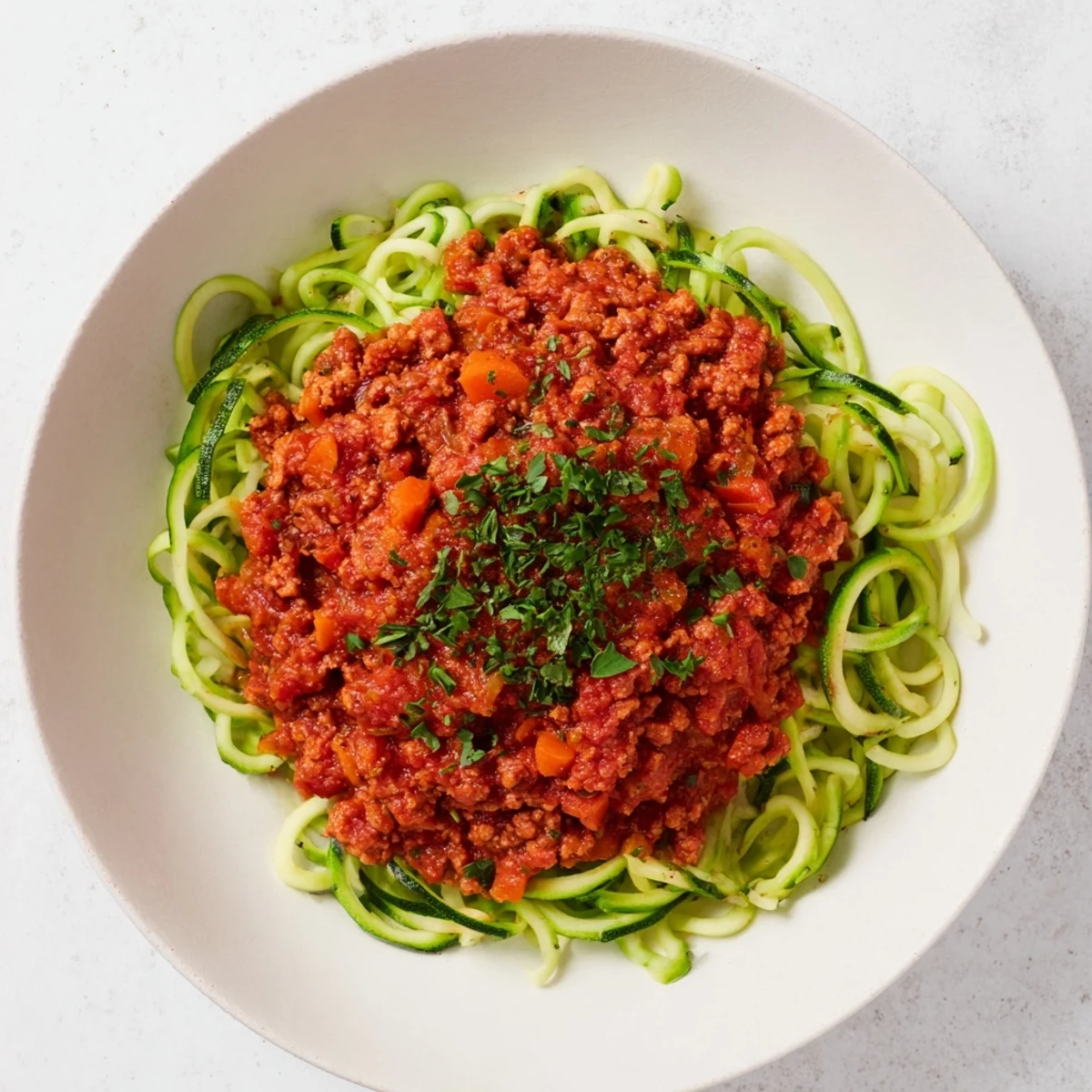
Save This dish features lean ground turkey simmered with aromatic vegetables and herbs in a rich tomato base. Paired with lightly sautéed zucchini noodles, it offers a fresh, low-carb alternative to traditional pasta. The sauce melds flavors of garlic, onion, carrot, celery, and Italian seasonings, creating a savory, hearty meal. Garnish with fresh herbs or Parmesan for added depth. Suitable for gluten-free and dairy-free adaptations, it's a balanced and flavorful main dish for any occasion.
I used to think Bolognese had to be heavy to be good, all that beef and pasta weighing you down after dinner. Then one weeknight I had ground turkey thawed and a pile of zucchini I needed to use, so I threw together what turned out to be the lightest, brightest version of this sauce I'd ever tasted. It didn't feel like a compromise, it felt like I'd stumbled onto something better.
The first time I made this for my sister, she didn't believe it was turkey until I showed her the empty package. She'd been avoiding red meat for months and missed Bolognese more than she'd admit, so watching her go back for seconds felt like a small victory. We sat at the counter with our bowls, twirling zucchini ribbons and talking until the kitchen got dark.
Ingredients
- Olive oil: A good glug of this gets everything started and adds a silky base, don't skimp or the vegetables will stick.
- Onion: Finely chopped so it melts into the sauce and sweetens as it cooks, forming the backbone of flavor.
- Garlic cloves: Minced fresh, never jarred, because that sharpness mellows into something warm and essential.
- Carrot: Diced small so it disappears into the sauce but leaves behind a subtle sweetness that balances the tomatoes.
- Celery stalk: Adds an earthy, aromatic layer that most people can't name but would miss if it wasn't there.
- Lean ground turkey: The star here, lighter than beef but just as satisfying when you brown it properly and let it soak up all the flavors.
- Dry white wine: Optional but worth it, the acidity cuts through the richness and adds a grown-up depth to the sauce.
- Crushed tomatoes: The thick, chunky kind that clings to everything, use the best canned tomatoes you can find.
- Tomato paste: Concentrated umami that darkens the sauce and makes it taste like it's been simmering all day.
- Dried oregano: A pinch of this brings that classic Italian herb warmth without overpowering the freshness.
- Dried basil: Sweet and slightly peppery, it rounds out the herb profile perfectly.
- Dried thyme: Adds a subtle earthiness that ties the vegetables and meat together.
- Crushed red pepper flakes: Just a little heat in the background, you can leave it out if you're not in the mood.
- Salt and black pepper: Season as you go, tasting and adjusting until everything sings.
- Bay leaf: Toss it in and forget about it, then fish it out before serving, it does its quiet work in the background.
- Zucchini: Spiralized into noodles that stay just firm enough to hold up under the sauce, use medium-sized ones for the best texture.
- Fresh parsley or basil: A handful of this chopped over the top makes everything look and taste brighter.
- Parmesan cheese: Optional, but a little grated over the finished dish adds a salty, nutty finish that's hard to beat.
Instructions
- Start the soffritto:
- Heat the olive oil in a large skillet over medium heat until it shimmers, then add the onion, carrot, and celery. Let them cook slowly for 5 to 7 minutes, stirring now and then, until they soften and smell sweet.
- Add the garlic:
- Toss in the minced garlic and stir for about a minute until the kitchen smells incredible. Don't let it brown or it'll turn bitter.
- Brown the turkey:
- Add the ground turkey and break it up with your spoon, pressing it into the pan so it browns in spots. Cook for 6 to 8 minutes until no pink remains and you see some golden bits stuck to the pan.
- Deglaze with wine:
- Pour in the white wine if you're using it and let it bubble away for 2 minutes, scraping up those browned bits. If you skip the wine, just move on, the sauce will still be great.
- Build the sauce:
- Stir in the crushed tomatoes, tomato paste, oregano, basil, thyme, red pepper flakes, salt, pepper, and bay leaf. Bring it to a gentle simmer, then partially cover and let it cook for 25 to 30 minutes, stirring occasionally, until it thickens and the flavors meld together.
- Cook the zucchini noodles:
- While the sauce simmers, heat another tablespoon of olive oil in a large skillet over medium-high heat. Add the spiralized zucchini and sauté for 2 to 3 minutes until just tender but still a little firm, then season with salt and pepper.
- Bring it together:
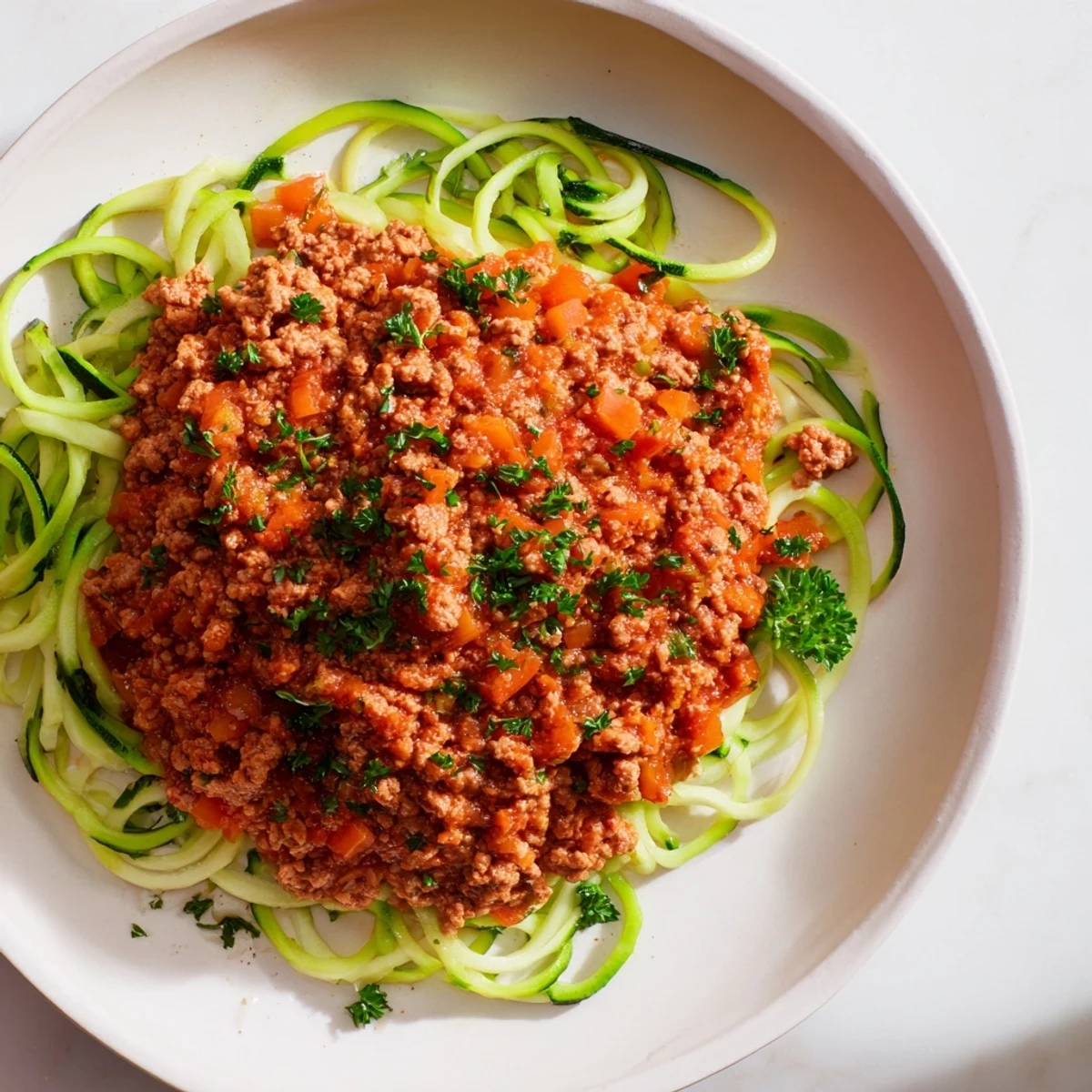
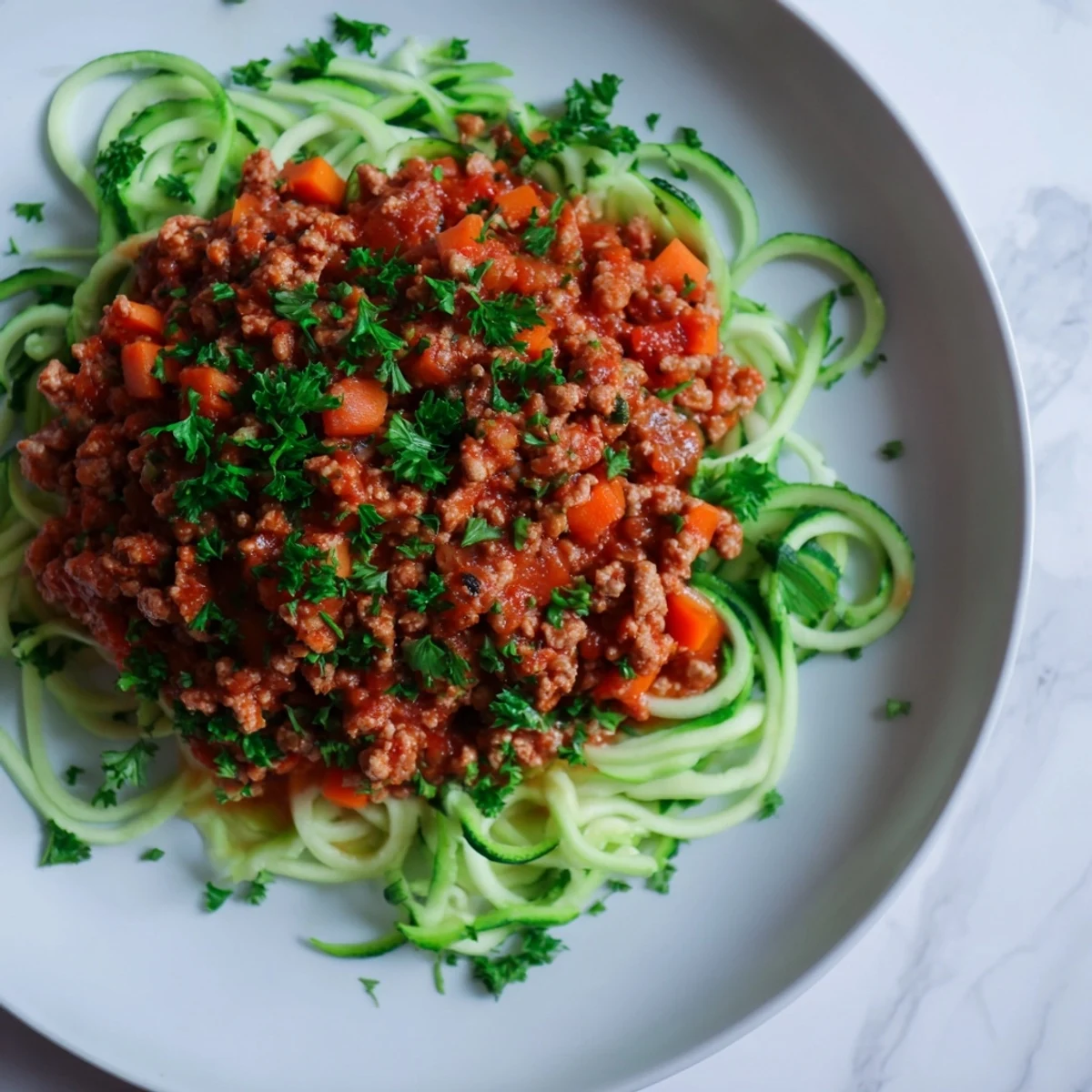
- Divide the zucchini noodles among four plates and spoon the turkey Bolognese over the top. Finish with fresh herbs and a sprinkle of Parmesan if you like.
 Save
Save I remember bringing this to a potluck once, worried people would judge the zucchini noodles as diet food. Instead, three people asked for the recipe before we even cleared the table, and one friend admitted she'd gone back for thirds. It's funny how something lighter can feel just as indulgent when it's done right.
Storing and Reheating
The Bolognese keeps beautifully in the fridge for up to three days and actually tastes better the next day after the flavors have had time to settle. I like to reheat it gently on the stove with a splash of water if it's thickened too much, and make fresh zucchini noodles instead of storing the cooked ones since they don't hold up well. If you want to freeze the sauce, let it cool completely, then pack it into containers and freeze for up to two months.
Swaps and Variations
If you're not sold on zucchini noodles, this sauce is just as happy over whole wheat pasta, gluten-free penne, or even spaghetti squash. I've also made it with lentils instead of turkey for a vegetarian version that's just as hearty, you just need to add them with the tomatoes and let everything simmer a bit longer. A splash of cream or milk stirred in at the end makes it richer if you're in the mood, though I usually skip it and don't miss it.
What to Serve Alongside
This dish is pretty complete on its own, but I like to serve it with a simple green salad dressed with lemon and olive oil, or some crusty bread if I'm feeling less virtuous. A glass of the same white wine you used in the sauce is a nice touch, and if you want something warm on the side, roasted broccoli or green beans work perfectly.
- A crisp arugula salad with shaved Parmesan and a squeeze of lemon cuts through the richness.
- Garlic bread or focaccia for anyone who wants to mop up every last bit of sauce.
- Roasted vegetables like bell peppers or asparagus add color and another layer of flavor to the plate.
 Save
Save This recipe taught me that lighter doesn't mean less satisfying, and that sometimes the best versions of classic dishes come from using what you have on hand. I hope it becomes one of those weeknight staples you turn to when you want something nourishing that still feels special.
Recipe Questions
- → Can I use regular pasta instead of zucchini noodles?
-
Yes, regular pasta or gluten-free varieties can be used as a substitute for zucchini noodles based on preference.
- → How can I make this dish vegetarian?
-
Replace ground turkey with lentils or plant-based meat alternatives to maintain texture and protein content.
- → What is the best way to sauté zucchini noodles?
-
Heat olive oil over medium-high heat and sauté zucchini noodles for 2-3 minutes until just tender, seasoning with salt and pepper.
- → Can I prepare the sauce in advance?
-
The sauce can be made ahead and refrigerated for up to 3 days or frozen for up to 2 months for convenient meal prep.
- → Is it necessary to use white wine in the sauce?
-
White wine adds depth but is optional; you can omit it without significantly altering the overall flavor.