
 Save
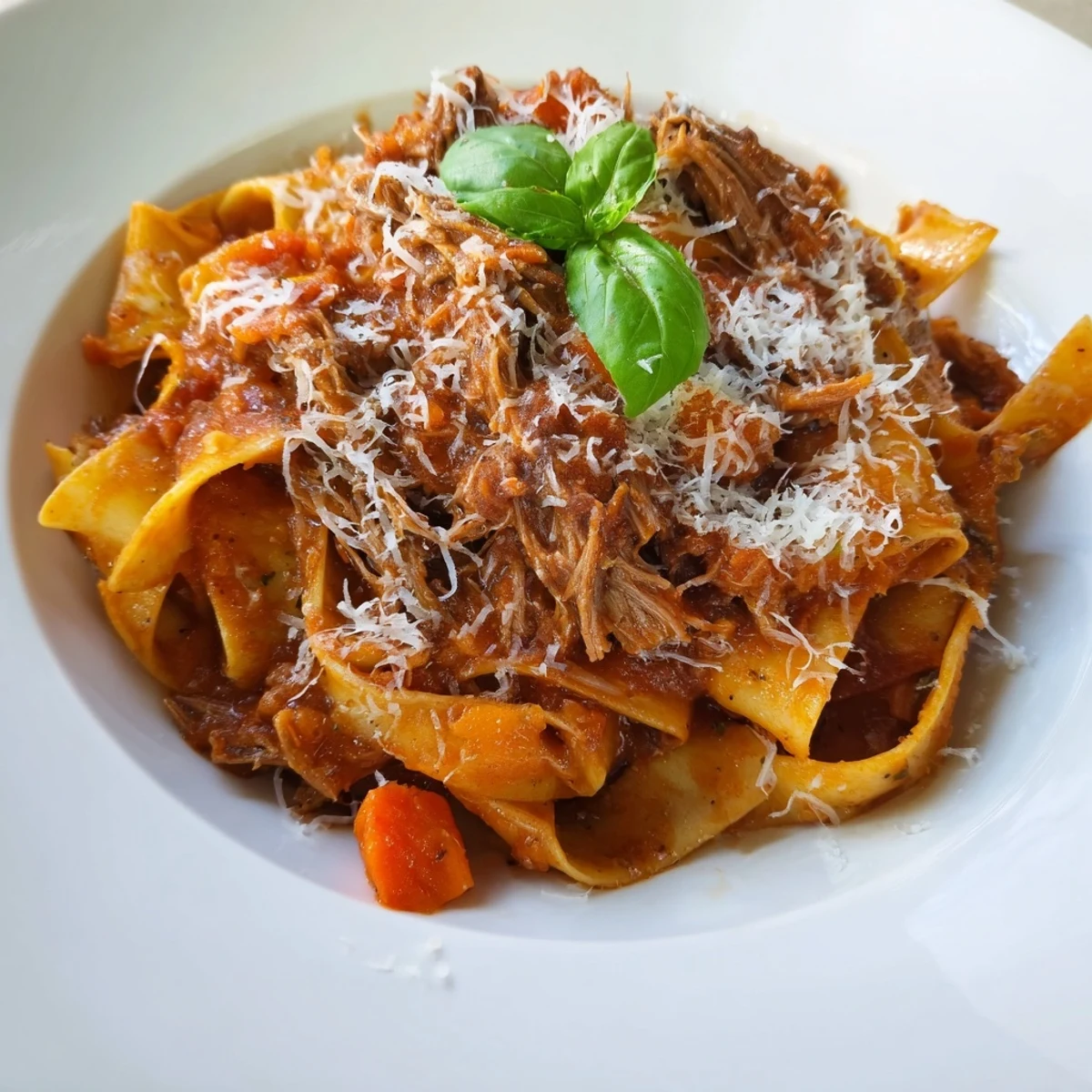
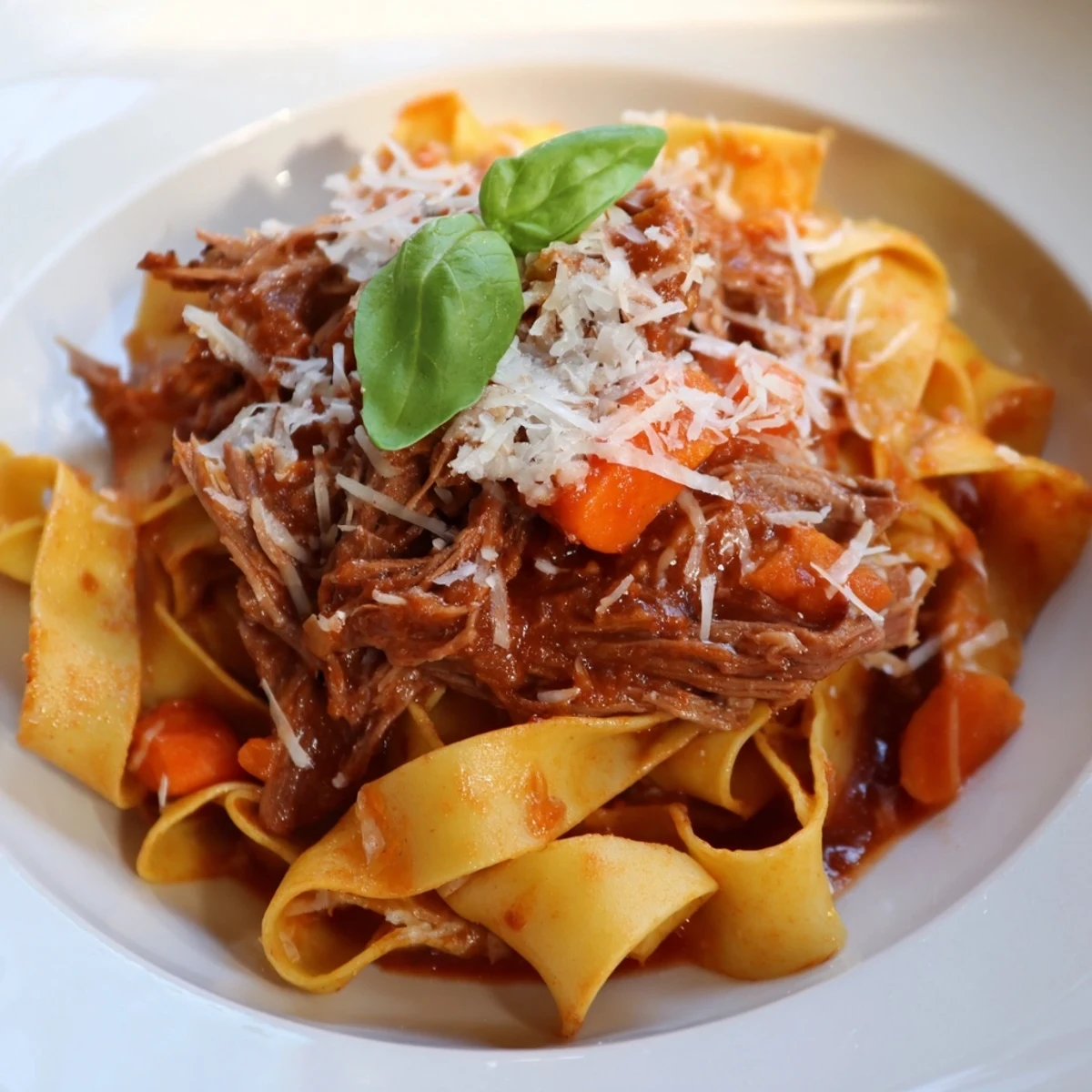
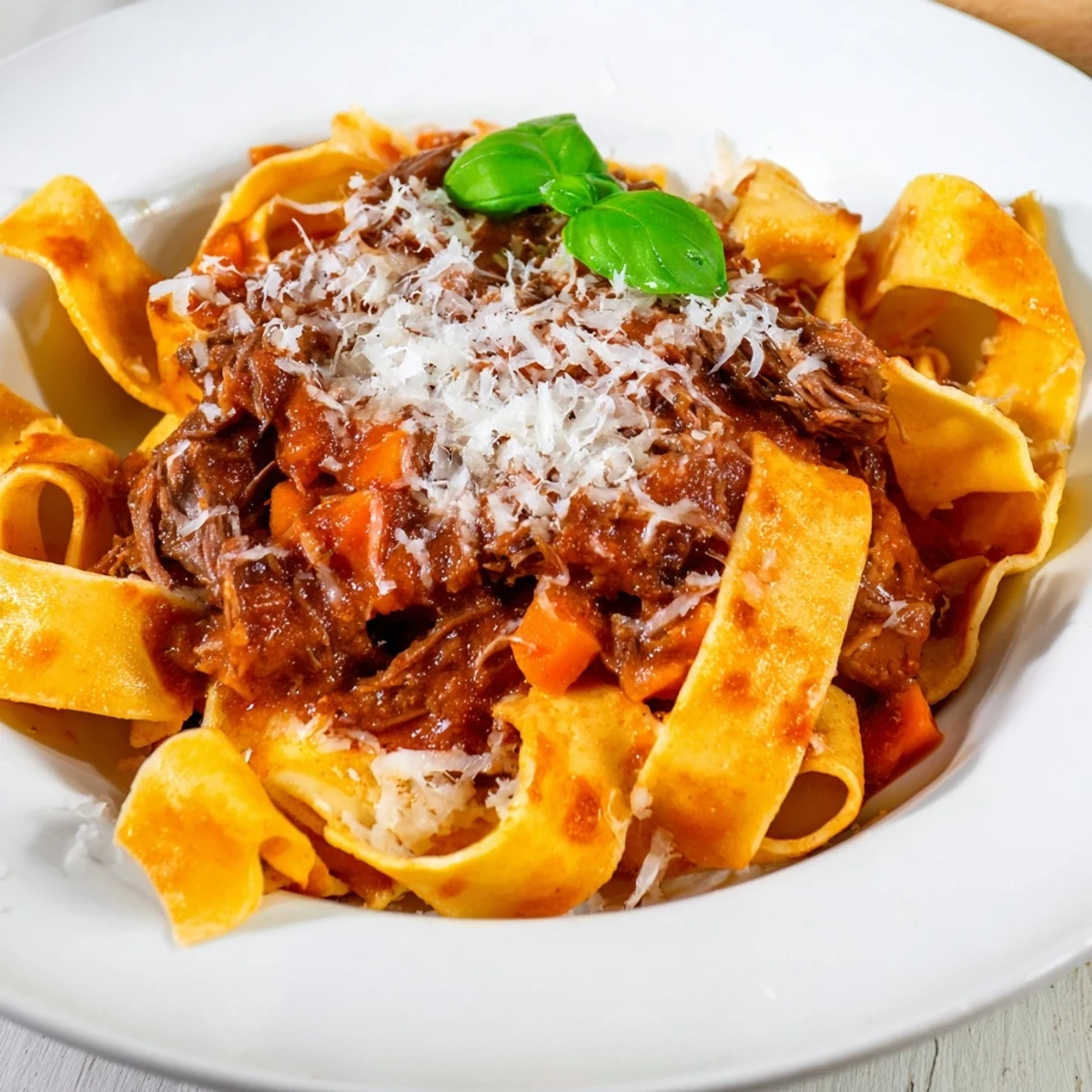
Save This dish features beef chuck chunks slowly cooked in a savory tomato and herb sauce, becoming tender and flavorful over eight hours. Aromatics like onions, carrots, celery, and garlic build depth, while red wine enriches the sauce. The result is served atop delicate pappardelle pasta, garnished with fresh basil and Parmesan for a rustic Italian meal that’s both comforting and satisfying.
There's something about the smell of beef and wine simmering all day that makes a kitchen feel like home. My neighbor once asked why my place always smelled like an Italian grandmother's kitchen, and I realized it was because I'd started making this ragu on lazy Sundays. It's the kind of dish that fills your house with warmth hours before anyone sits down to eat, and by the time dinner arrives, you're already halfway to comfort.
I made this for my sister's dinner party once, convinced I'd somehow ruin it even though the slow cooker was doing everything. She walked in two hours early, caught a whiff, and just sat at the kitchen counter without saying a word until it was ready. That's when I knew this recipe was special.
Ingredients
- Beef chuck roast (2 lbs), cut into chunks: This cut has just enough marbling to become silky after hours of slow cooking, unlike leaner cuts that dry out. Don't trim it too aggressively; the fat is what creates depth.
- Olive oil (2 tbsp): Enough to get a proper sear on the beef, which builds flavor that the slow cooker can't replicate alone.
- Yellow onion, carrots, and celery (1 each): This is the holy trinity of Italian cooking, and finely chopped means they'll dissolve into the sauce and create body.
- Garlic (4 cloves), minced: Add it after the soffritto so it doesn't burn and turn bitter during those eight hours.
- Dry red wine (1/2 cup): Don't use anything you wouldn't drink; cheap wine makes thin sauce.
- Crushed tomatoes and tomato paste (1 can + 2 tbsp): The paste concentrates the tomato flavor, and the whole canned tomatoes give texture.
- Beef broth (1 cup): This keeps the sauce from becoming too thick and adds savory depth.
- Oregano, thyme, and bay leaves: Dried herbs are your friend here; fresh would cook down to nothing over eight hours.
- Pappardelle pasta (1 lb): The wide ribbons catch the ragu beautifully, but tagliatelle or fettuccine work just as well.
- Parmesan cheese and fresh basil: These come at the end, when the dish needs brightness and a reminder that it's still alive.
Instructions
- Season and sear the beef:
- Salt and pepper the beef chunks generously, then get your skillet smoking hot with olive oil. You want a deep brown crust on each side, about five minutes total; this is where the ragu's soul comes from.
- Sauté the soffritto:
- In the same skillet, cook the onion, carrots, and celery until they soften and start to smell sweet, around four or five minutes. Add the garlic for just one minute more so it wakes up but doesn't burn.
- Deglaze and combine:
- Pour the red wine into the hot pan and let it bubble, scraping the bottom with a wooden spoon to lift all those caramelized bits. Transfer everything to the slow cooker, then add the tomatoes, tomato paste, broth, and all your herbs.
- Slow cook until tender:
- Cover and set to low for eight hours, or until the beef falls apart when you look at it sideways. The long, gentle heat transforms tough chuck into something that barely needs teeth.
- Shred and taste:
- Remove the bay leaves, then use two forks to pull the beef apart right in the pot. Taste it and adjust salt, pepper, or herbs if something feels flat.
- Cook the pasta:
- About twenty minutes before serving, get your pasta water boiling and cook the pappardelle to al dente. This timing means the sauce stays hot and the pasta stays warm when they meet on the plate.
- Finish and serve:
- Twirl pasta onto a plate or into a bowl, spoon the ragu over the top, and finish with a shower of Parmesan and a few leaves of fresh basil.
 Save
Save What gets me about this dish is how it transforms waiting into something sacred. You're not really cooking for eight hours; you're just living your life while something wonderful happens in the corner of your kitchen.
Building the Foundation
The soffritto—that gentle sauté of onion, carrot, and celery—is where Italian cooking shows its wisdom. These three vegetables don't fight each other; they create a base that tastes more like home than any single ingredient could alone. When you cook them slowly in olive oil until they're soft enough to almost dissolve, you're building a flavor foundation that eight hours of slow cooking will only deepen.
Timing and Temperature
Eight hours on low heat is the sweet spot for this ragu, though different slow cookers run hot or cool, so check it at the six-hour mark if you're nervous. The beef should be tender enough that a spoon can shred it without effort, and the liquid should have reduced slightly, concentrating all those flavors into something rich and layered.
Make It Your Own
This ragu is forgiving enough to welcome your instincts. Some people add a pinch of sugar if the tomatoes taste too sharp, others stir in a splash of heavy cream at the end for richness, and some swear by a small piece of cinnamon stick simmered in the pot. The skeleton of the recipe stays the same, but you get to decide what the dish becomes.
- For a smoother sauce, blend it with an immersion blender before serving, or leave it chunky if you like texture.
- This freezes beautifully for up to three months, so make a double batch and thank yourself later.
- Leftovers work magic in lasagna, as a filling for pastry, or even spooned over creamy polenta.
 Save
Save This is the kind of recipe that becomes part of your cooking life without you planning for it to. Make it once, and you'll find yourself making it again.
Recipe Questions
- → How long should the beef cook for optimal tenderness?
-
Cook the beef on low heat for about 8 hours until it becomes tender and easily shreds with a fork.
- → Can I substitute the pasta used in this dish?
-
Yes, tagliatelle or fettuccine can be used as alternatives to pappardelle with similar results.
- → What type of wine works best in the sauce?
-
Dry red wines such as Chianti or Sangiovese complement the rich tomato and beef flavors well.
- → How do I get a smoother sauce texture?
-
Before shredding the beef back into the sauce, remove the meat and blend the sauce with an immersion blender for a smoother consistency.
- → Can this dish be adapted for gluten-free diets?
-
Use gluten-free pasta varieties instead of traditional pappardelle to make the dish gluten-free.