
 Save
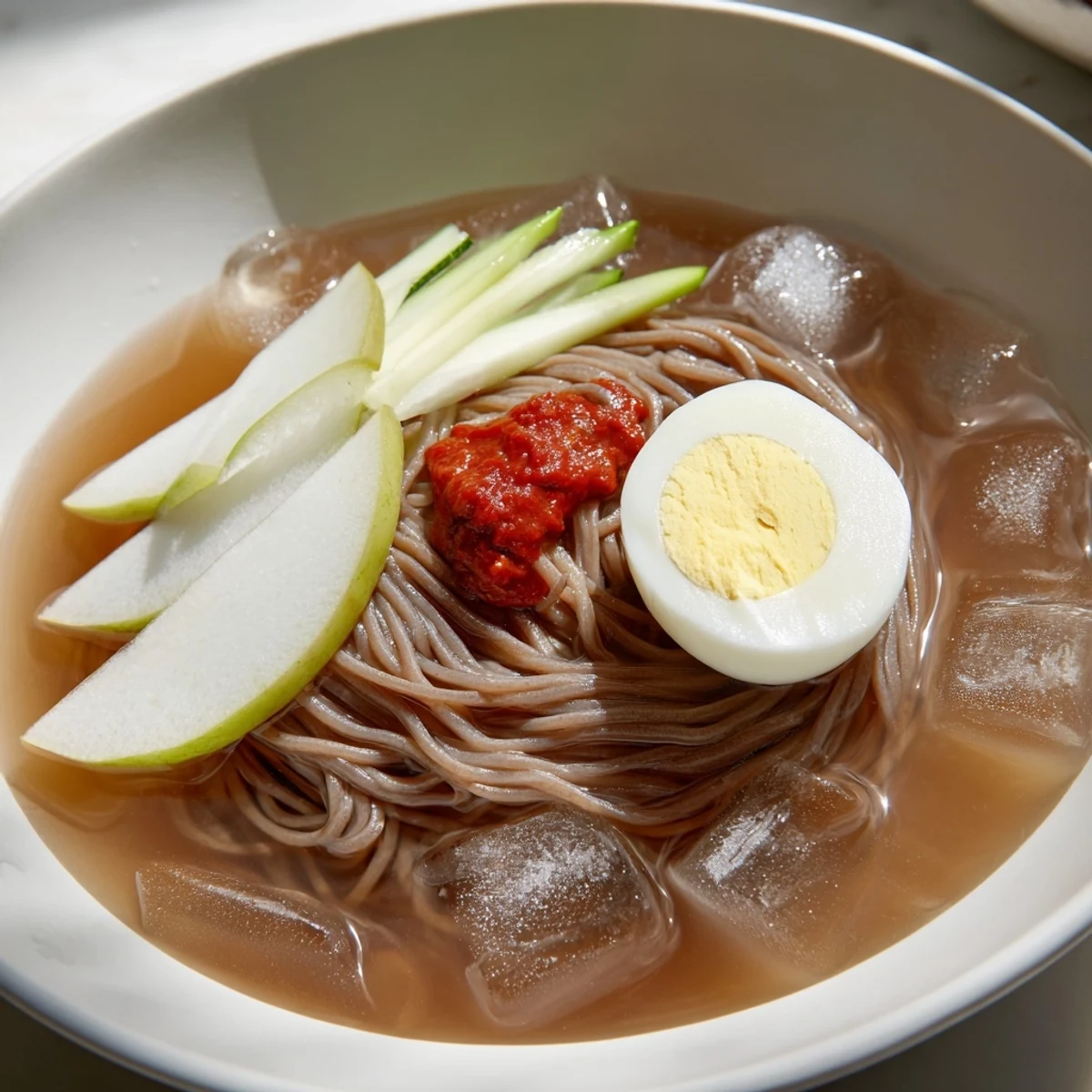
Save Experience the refreshing flavors of authentic Korean naengmyeon with chewy buckwheat noodles served in an icy tangy broth. This cold dish features tender beef brisket, crisp Asian pear and cucumber, plus perfectly hard-boiled eggs.
The broth combines beef stock with rice vinegar, creating the perfect balance of savory and tart. Traditionally enjoyed during summer, these noodles offer cooling relief with satisfying texture contrast between springy noodles and fresh garnishes.
Customizable with gochujang for extra heat, this dish comes together in 40 minutes and serves four people generously.
My first encounter with naengmyeon happened at a tiny hole-in-the-wall restaurant in Los Angeles Koreatown, where the owner warned me about the chewing challenge ahead. She laughed watching me attempt to tackle those impossibly long, chewy buckwheat noodles with kitchen scissors. Now I make this cold soup every summer when my kitchen feels like an oven and cooking anything hot seems impossible.
Last July, when my air conditioner broke during a heatwave, I survived on batch after batch of this soup. My friend Sarah dropped by for lunch and initially looked skeptical about cold soup, but halfway through her bowl she was planning her own naengmyeon dinner party.
Ingredients
- Beef broth: Homemade beef broth gives the best depth, but low-sodium store-bought works in a pinch
- Rice vinegar: This provides the signature tang that makes the broth so refreshing
- Sesame oil: A little goes a long way to add aromatic depth to the cold broth
- Naengmyeon noodles: These chewy buckwheat noodles are the heart of the dish and can be found at Asian markets
- Asian pear: Adds natural sweetness and a lovely crisp texture contrast
- Ice cubes: Absolutely essential for keeping everything bracingly cold
Instructions
- Mix the chilling broth:
- Combine beef broth, cold water, rice vinegar, sugar, soy sauce, sesame oil, and salt in a large bowl, stirring until the sugar and salt completely dissolve. Pop it in the fridge to get thoroughly cold.
- Prep your toppings:
- Boil your eggs for exactly 10 minutes, then cool them quickly under running water for easier peeling. Thinly slice your cooked beef brisket, cucumber, Asian pear, and any pickled radish you are using.
- Cook the noodles:
- Drop naengmyeon noodles into a large pot of boiling water and cook for about 3-4 minutes until tender but still springy. Drain and rinse them under cold running water until the noodles are completely chilled and no longer feel starchy.
- Build your bowls:
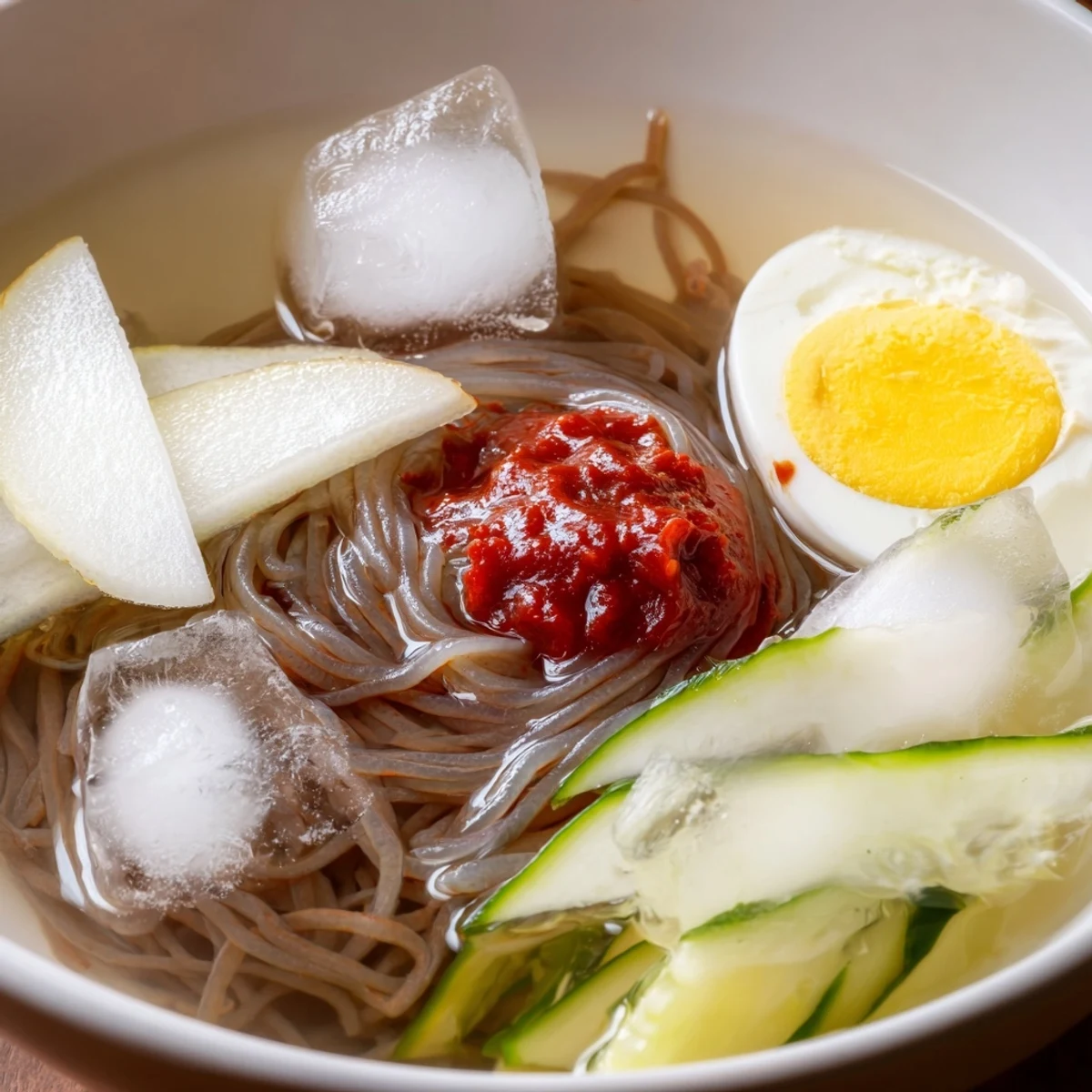
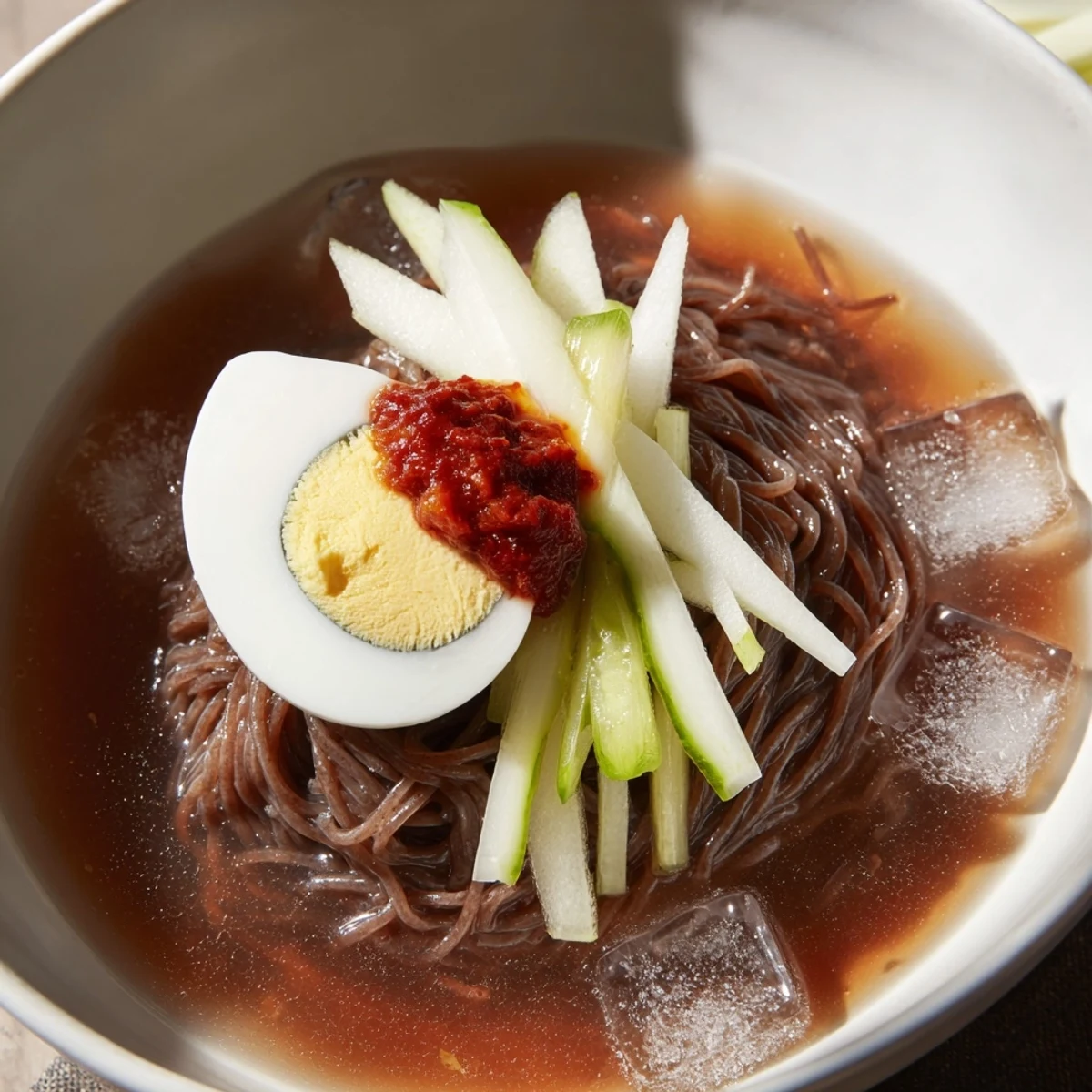
- Divide the cold noodles among four bowls, then pour that ice-cold broth right over them. Arrange cucumber slices, pear, beef, and egg halves on top in a pretty pattern.
- Finish with the extras:
- Add ice cubes to each bowl to maintain that frigid temperature, then sprinkle sesame seeds over everything. Add a dollop of gochujang on the side if you want some heat.
 Save
Save This soup has become my go-to remedy for oppressively humid days, and I have converted more than a few cold soup skeptics along the way. There is something about the contrast of chewy noodles and refreshing broth that feels like an edible reset button.
The Art of Cold Soup
Cold soups might feel strange at first, especially if you grew up on hot meals, but there is a reason they are beloved across many cultures. The key is balance, the broth needs enough acid and savoriness to stand up to being cold.
Noodle Wisdom
Naengmyeon noodles are notoriously chewy, and that is exactly what makes them perfect for cold preparation. They hold up beautifully in liquid without getting mushy, unlike softer noodles that turn sad and waterlogged.
Make It Your Own
While traditional naengmyeon uses beef broth, I have experimented with chicken and even a vegetarian mushroom broth that worked surprisingly well.
- Try adding a splash of kimchi juice for extra fermented depth
- Thinly sliced radishes add a lovely peppery crunch
- A drizzle of mustard oil creates an authentic spicy kick
 Save
Save I hope this cold noodle soup becomes your summer survival staple just as it has become mine. Nothing quite beats the simple pleasure of slurping something this refreshing when the world outside feels like a sauna.
Recipe Questions
- → What makes naengmyeon noodles unique?
-
Naengmyeon noodles are made primarily from buckwheat and sweet potato starch, creating an exceptionally chewy and springy texture. Unlike other Asian noodles, these maintain their firm texture even when submerged in cold broth for extended periods.
- → Can I substitute the beef broth?
-
Yes, pork or chicken broth work beautifully as alternatives. For a lighter version, vegetable broth creates an equally delicious base. Some traditional preparations even incorporate dongchimi (radish water kimchi) brine for authentic tanginess.
- → What's the best way to cook naengmyeon noodles?
-
Boil noodles for 3-4 minutes until tender but still firm. Immediately rinse under cold running water to stop cooking and remove excess starch. This step is crucial for achieving the characteristic chewy texture and preventing clumping.
- → Can naengmyeon be made in advance?
-
The broth actually improves when made ahead, developing deeper flavor after chilling overnight. Prepare toppings and slice vegetables beforehand. Cook noodles fresh before serving, though they can be rinsed and stored refrigerated for a few hours if tossed with a little sesame oil.
- → What can I use if I can't find naengmyeon noodles?
-
Japanese soba noodles make an excellent substitute with similar buckwheat flavor and texture. For gluten-free options, ensure your soba is 100% buckwheat. Thin udon noodles work in a pinch, though they lack the distinctive chewiness of traditional naengmyeon.