
 Save
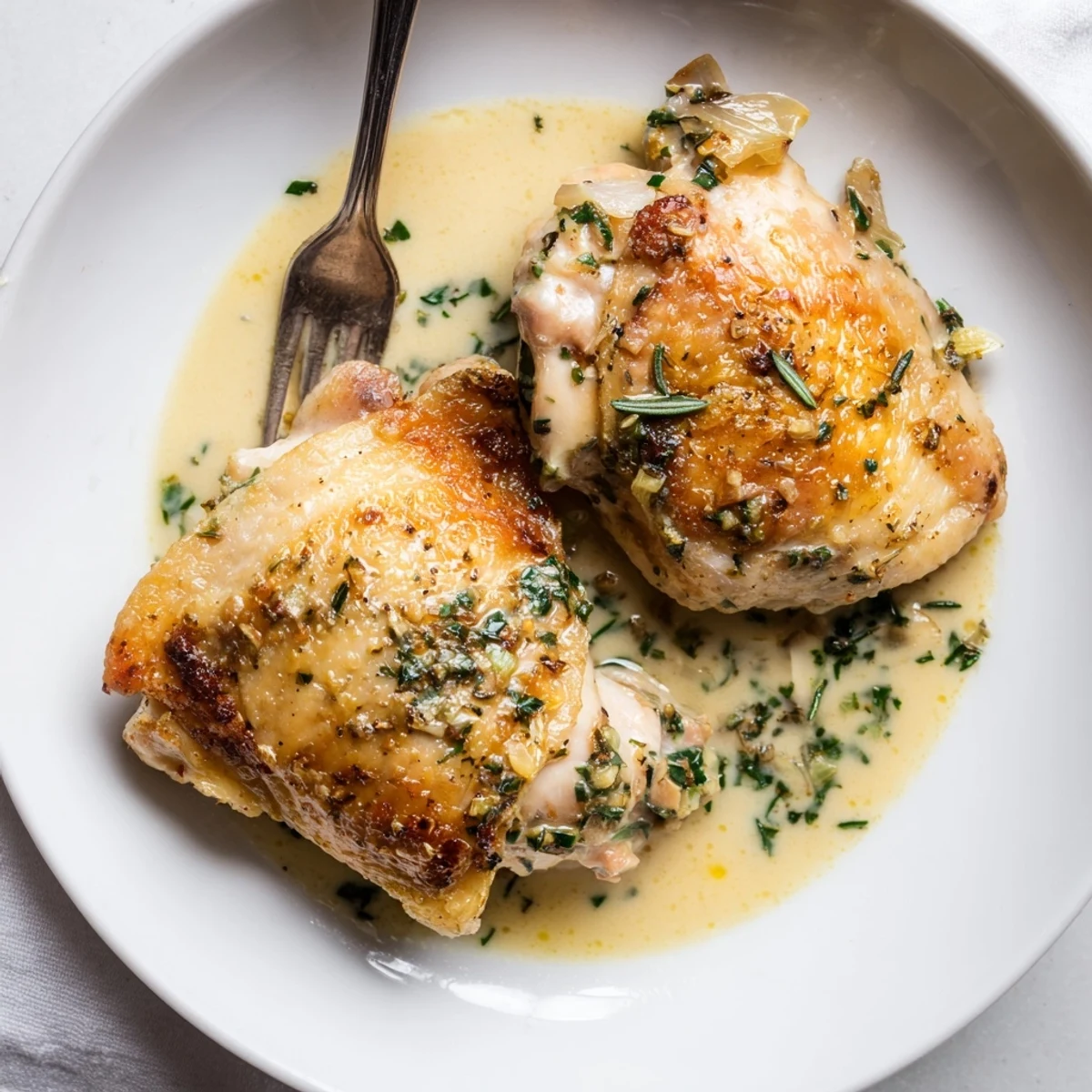
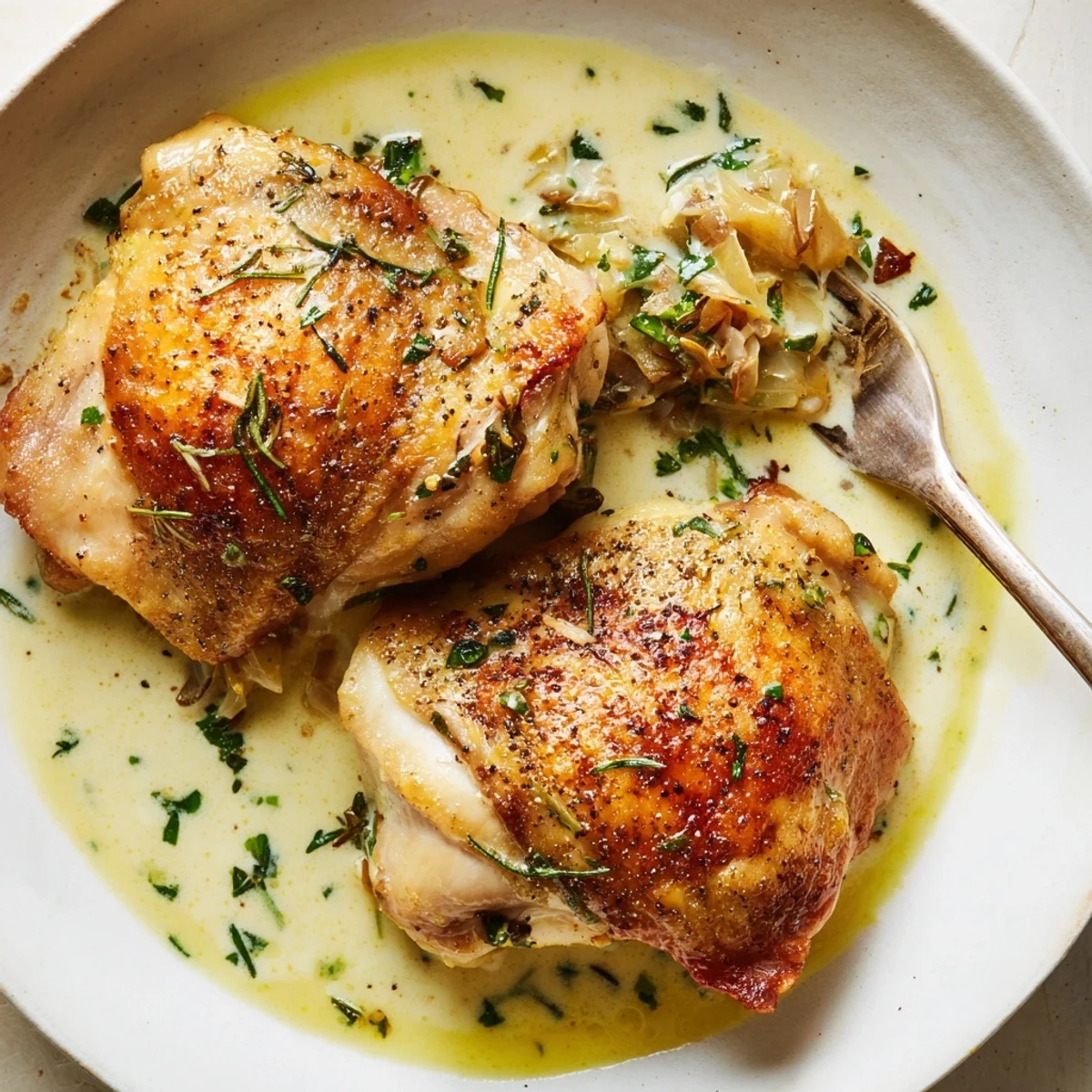
Save Start by patting skin-on chicken thighs dry, seasoning, then sear skin-side down in olive oil and butter until deeply golden. Sauté shallot and garlic, deglaze with chicken broth, then lower heat and stir in heavy cream, thyme, rosemary and parsley. Return the thighs to the skillet, spoon sauce over them and finish in a 400°F oven until cooked through. Serve hot with mashed potatoes, rice or crusty bread and a sprinkle of fresh parsley.
The sound of chicken skin hitting a hot skillet on a rainy Tuesday evening is something I never get tired of. My neighbor walked in once unannounced while this was in the oven and immediately sat down at the table without being asked. That creamy garlic aroma has a way of making people forget their manners in the best possible way.
I started making this back when my youngest refused to eat anything with visible herbs on it. The trick was chopping everything fine enough that she thought the green flecks were just part of the sauce.
Ingredients
- 8 bone in skin on chicken thighs: The skin is nonnegotiable because it renders fat into the pan and that is where half the flavor lives.
- 1 cup heavy cream: Full fat is the way to go here because it reduces into a sauce that clings to every bite.
- 2 tablespoons unsalted butter: Combined with olive oil it gives you a higher smoke point for searing plus rich flavor.
- 6 cloves garlic minced: Six sounds aggressive until you taste the mellow sweetness it takes on in cream and then you will want to add more.
- 1 medium shallot finely chopped: Shallot adds a gentler onion flavor that never overpowers the garlic.
- 3/4 cup low sodium chicken broth: Low sodium lets you control the salt level because the reducing process concentrates everything.
- 2 tablespoons fresh parsley chopped: Half goes into the sauce and half gets sprinkled on at the end for freshness.
- 1 tablespoon fresh thyme leaves: Thyme and chicken are old friends that never let each other down.
- 1 tablespoon fresh rosemary chopped: A little rosemary goes a long way so do not be tempted to double it.
- 1/2 teaspoon salt plus more to taste: Season in layers starting with the chicken then adjusting the sauce at the end.
- 1/2 teaspoon freshly ground black pepper: Freshly cracked makes a noticeable difference in a sauce this simple.
- 1 tablespoon olive oil: Just enough to keep the butter from browning too fast.
Instructions
- Preheat and prep:
- Set your oven to 400 degrees Fahrenheit and pat every chicken thigh dry with paper towels because dry skin is the only way to get that deep golden crust.
- Season the chicken:
- Sprinkle both sides of each thigh generously with salt and pepper and let them sit while the pan heats up.
- Get the pan hot:
- Heat olive oil and butter together in a large ovenproof skillet over medium high heat until the butter stops bubbling and the shimmer looks almost dangerous.
- Sear skin side down:
- Lay the thighs in skin side down and do not touch them for at least five minutes because moving them tears the skin before it has a chance to crisp.
- Flip and rest:
- Flip each piece and cook two more minutes then transfer them to a plate while you build the sauce in the same pan.
- Wake up the aromatics:
- Toss the shallot and garlic into the drippings and stir for about a minute until your kitchen smells like an Italian grandmother moved in unannounced.
- Build the sauce base:
- Pour in the chicken broth and use a wooden spoon to scrape up every caramelized bit stuck to the bottom because that is concentrated flavor you do not want to waste.
- Add the cream and herbs:
- Lower the heat and stir in the heavy cream, thyme, rosemary, and half the parsley, then taste it because this is your last chance to adjust before it goes in the oven.
- Return the chicken:
- Nestle the thighs back into the skillet skin side up and spoon a little sauce over each one so nothing dries out during baking.
- Finish in the oven:
- Transfer the whole skillet into the oven for fifteen to eighteen minutes until the internal temperature hits 165 degrees Fahrenheit and the sauce is bubbling around the edges.
- Serve immediately:
- Pull it out and scatter the remaining parsley on top and bring the skillet straight to the table because the presentation is half the joy.
 Save
Save The first time I served this to my mother in law she closed her eyes after the first bite and I knew I had finally won her over.
What To Serve Alongside
Mashed potatoes are the obvious choice because they act as a vehicle for every drop of extra sauce. Rice works beautifully too, and crusty bread is not optional in my house because someone always wants to mop the skillet clean.
Making It Your Own
Tarragon is a stunning substitute for thyme if you want something with a slight anise sweetness. Fresh basil stirred in at the very end adds a summery brightness that completely changes the personality of the dish.
Storage And Reheating
Leftovers keep well in the fridge for up to three days and the sauce actually thickens overnight into something even more indulgent.
- Reheat gently on the stove over low heat because high heat will cause the cream sauce to break and separate.
- A splash of chicken broth stirred in while reheating brings the sauce back to life if it has thickened too much.
- Do not reheat in the microwave uncovered or you will be scrubbing cream off the walls of your appliance.
 Save
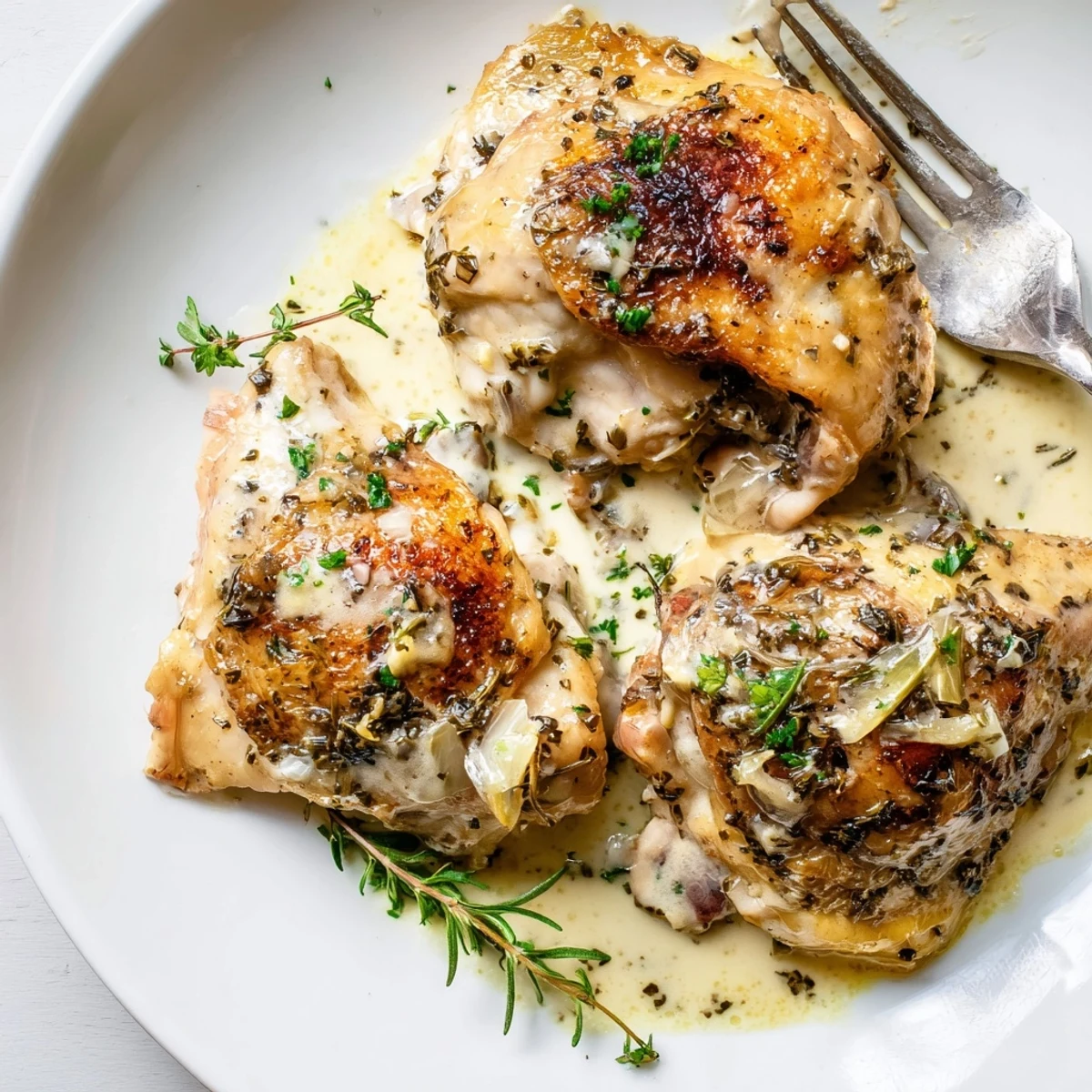
Save Some dishes you make to impress and some you make because they make a regular weeknight feel like a small celebration. This one somehow manages to do both.
Recipe Questions
- → How do I get extra-crispy skin on the thighs?
-
Pat the skin completely dry before seasoning and start over medium-high heat without crowding the pan. Sear skin-side down until deeply golden before flipping, and avoid adding liquid until after the skin is crisp.
- → Can I use a lighter dairy option?
-
Yes — substitute half-and-half or a mix of milk and a little cream for a lighter finish. Reduce slightly on low heat to thicken, and avoid boiling to prevent separation.
- → How long should the chicken bake in the oven?
-
After searing and adding the sauce, bake in a 400°F (200°C) oven for about 15–18 minutes, until the internal temperature reaches 165°F (74°C) and juices run clear.
- → What are good herb substitutions?
-
Swap thyme and rosemary for tarragon, basil or sage for different flavor profiles. Fresh herbs added at the end brighten the sauce; dried herbs work if cooked a bit longer to release aroma.
- → How can I make this gluten-free?
-
Ensure the chicken broth is labeled gluten-free and use naturally gluten-free ingredients. No flour is required for the sauce, so the dish is easily compatible with a gluten-free diet.
- → What’s the best way to reheat leftovers?
-
Reheat gently on the stovetop over low heat, stirring occasionally to prevent the cream from breaking. Add a splash of broth or cream if the sauce has thickened too much.