
 Save
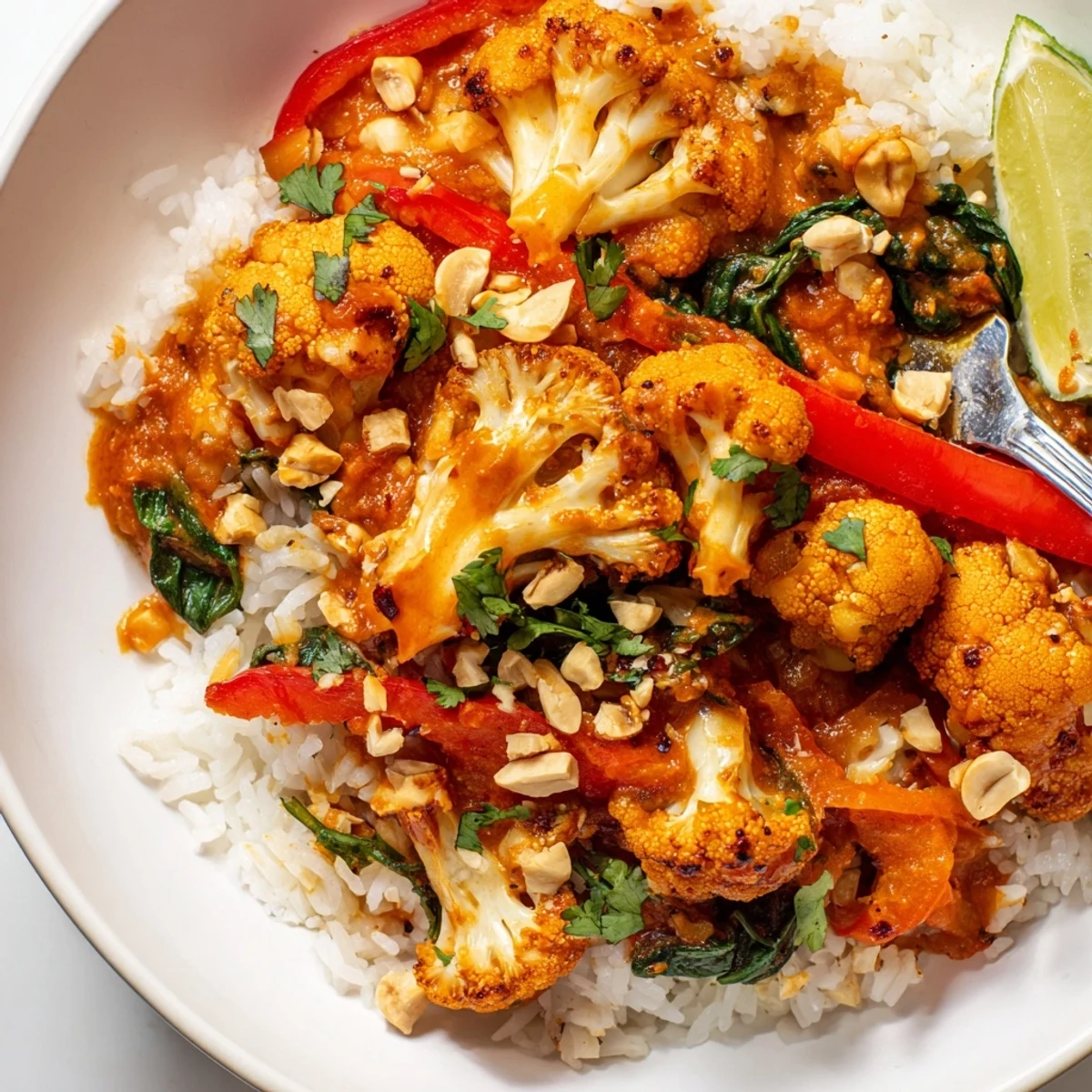
Save Roast cauliflower and red bell pepper at 220°C (425°F) until caramelized, about 25–30 minutes. Cook jasmine rice separately until fluffy. Sauté onion, garlic and ginger, stir in red curry paste, then coconut milk, soy sauce and turmeric; simmer until slightly thickened. Combine with roasted vegetables, wilt spinach if using, finish with lime juice and cilantro, and serve over rice with toasted cashews for crunch.
There are some evenings when you want dinner to surprise you—the kitchen filling with the sizzle of roasting vegetables and the aroma of curry almost masking the rain tapping on the window. The first time I made this roasted cauliflower red curry rice, it wasn't planned. I was just chasing warmth and color on a dull day, grabbing whatever looked lively in the produce drawer. The result was a vibrant, deeply flavored bowl that lifted the entire mood of the night.
One night I served this to a group of friends after a board game marathon—no one spoke for the first few minutes of dinner, too busy chasing crunchy edges of cauliflower coated in spicy coconut sauce. It became the dish I remembered for how easily it seemed to bring everyone back to life after hours of laughter and competition.
Ingredients
- Cauliflower florets: Roasting them at high heat gives beautiful brown edges; always pat them dry for maximum crispiness.
- Red bell pepper: I love slicing these a bit thick so they don’t disappear—choose one with shiny skin.
- Onion: Finely chopping ensures a sweet foundation without overpowering the other flavors.
- Garlic & ginger: Freshly minced, these unlock depth in the sauce you simply can't get from powders.
- Baby spinach: I add it at the end for quick wilting and extra color; you can skip if you like.
- Jasmine or basmati rice: A gentle rinse keeps it from sticking and gives a fluffier end result.
- Red curry paste: The soul of the sauce—taste yours first as heat levels vary wildly between brands.
- Coconut milk: Go for full-fat if you can, it creates that luscious, comforting sauce.
- Soy sauce or tamari: A splash deepens flavor and keeps the dish gluten-free if needed.
- Ground turmeric: Adds both earthy undertones and a golden glow.
- Olive oil: Toss veggies and start the sauté here for best flavor melding.
- Lime juice: Squeezing fresh at the end brightens up the whole dish.
- Fresh cilantro: Scatter on top just before serving for irresistible herbal notes.
- Lime wedges: Have extra at the table for customization.
- Toasted cashews or peanuts: Optional, but their crunch is so satisfying—watch them closely when toasting to avoid burning!
Instructions
- Roast the Veggies:
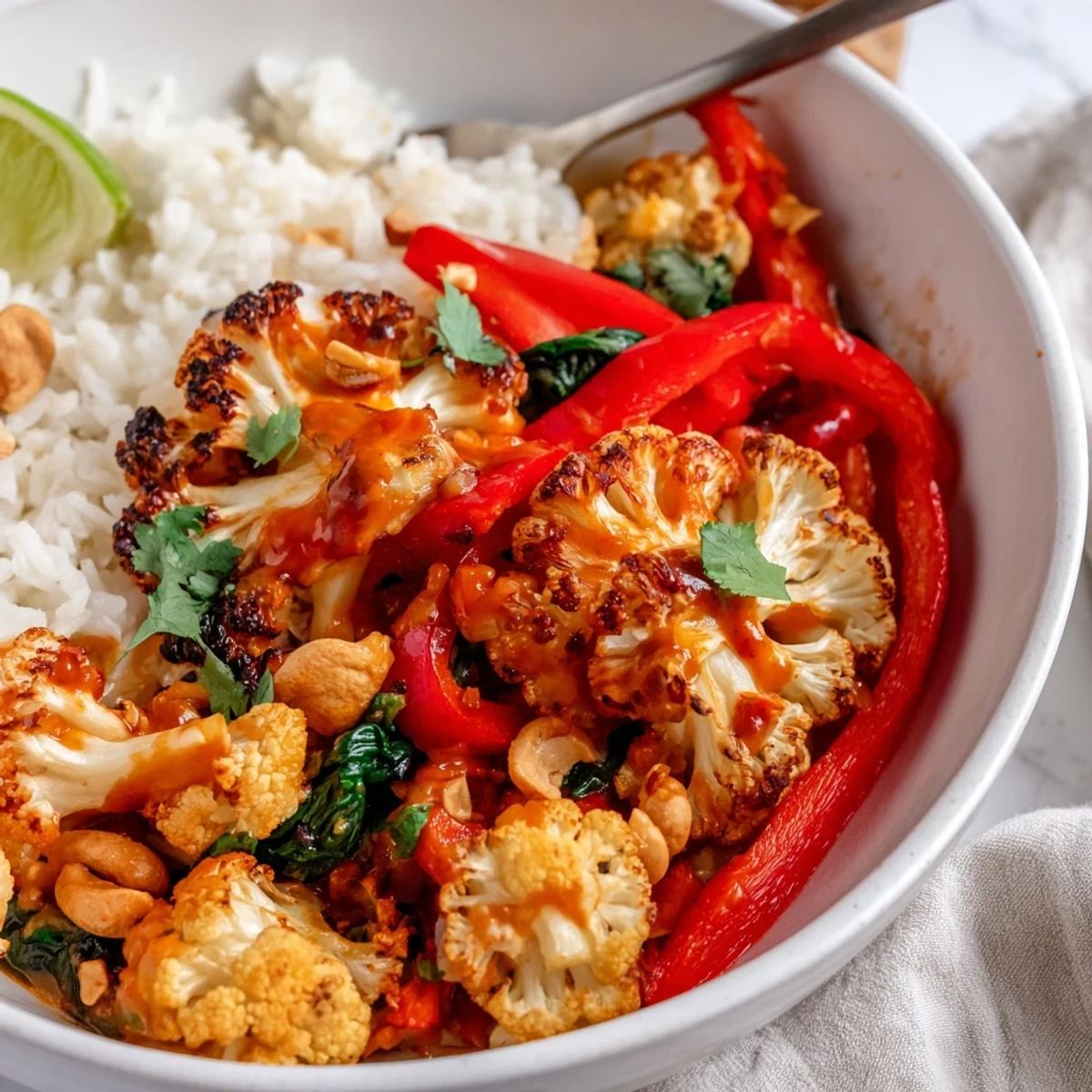
- Scatter cauliflower and bell pepper on a sheet, drizzle with oil, sprinkle with turmeric and salt, then toss and spread in a single layer. Slide it in the oven—the sound of sizzling means those caramel edges are forming; turn them halfway for even bronzing.
- Make the Rice:
- Pour rinsed rice and water with salt into a saucepan, bring to a boil, then cover and drop the heat. The moment the rice soaks up all the liquid and lets out a faint, nutty aroma, you know it's perfect—fluff gently.
- Build the Curry Base:
- Warm oil in a skillet over medium and let onions, garlic, and ginger sizzle, stirring just until they whisper sweetness. Spoon in curry paste and wait for a bloom of fragrance, then add coconut milk and soy sauce, letting the sauce simmer and thicken to a silkiness that coats your spoon.
- Toss In Roasted Veggies:
- Add the browned cauliflower and roasted peppers to the simmering sauce—watch how the sauce clings to every edge. If you like, fold in baby spinach for just a minute; finish with lime juice for a punch of brightness.
- Serve and Garnish:
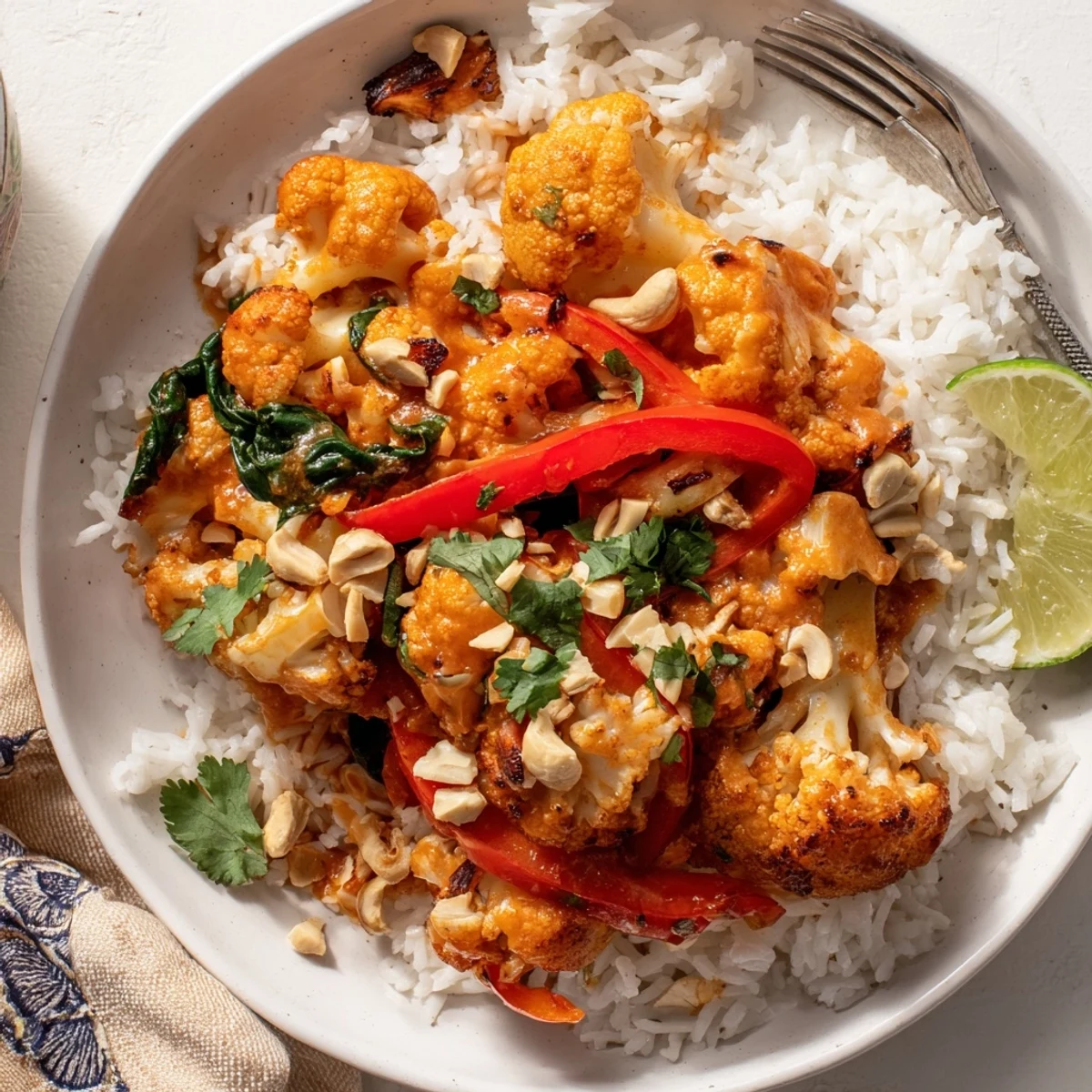
- Scoop curry over fluffy rice, top with a tumble of cilantro, fresh lime wedges, and a handful of toasted cashews or peanuts if you fancy a crunch—each plate is a riot of color and scent.
 Save
Save The day someone asked for seconds before they'd even finished their first helping, I realized this wasn't just another thrown-together dinner. It was the kind of meal that slows people down and brings them back for just one more spoonful.
When You Want Extra Veggie Power
I’ve tried stirring in peas for little pops of sweetness, or diced carrots for extra crunch—the dish is generous and doesn't mind your improvising. The more colors you add, the brighter it looks and tastes.
Pairing and Sides That Shine
This red curry rice holds its own, but a crisp Sauvignon Blanc or light lager washes it down beautifully. Sometimes I set out naan or rice crackers, letting people scoop up every saucy bit without a fuss.
Little Tweaks That Make It Yours
I’ve swapped in tofu or chickpeas when I need extra protein and have even tossed leftover roasted veggies from the fridge for a zero-waste twist. The dish seems to welcome substitutes—just don't forget the squeeze of lime on top.
- Toasting the nuts gives them a whole new depth—don't skip this tiny step.
- If you love heat, add a pinch of chili flakes at the end.
- Always taste your curry before serving—each brand of paste has its own secrets.
 Save
Save I hope you find yourself with a full bowl and good company before you know it. This curry has a habit of turning any weeknight into a little celebration.
Recipe Questions
- → How long should I roast the cauliflower for best texture?
-
Roast at 220°C (425°F) for 25–30 minutes, turning once. This gives browned edges and tender centers; if smaller florets are used, check around 20 minutes to avoid overcooking.
- → Which rice works best with the curry sauce?
-
Jasmine or basmati both pair well: jasmine adds floral aroma and basmati gives a light, separate grain. Cook with a 1:2 rice-to-water ratio and fluff before serving.
- → How can I control the spice level?
-
Adjust the amount of red curry paste to taste or use a milder paste. Adding more coconut milk or a squeeze of lime will mellow heat, while extra paste or a pinch of chili flakes increases it.
- → What are good protein additions for a heartier meal?
-
Chickpeas or pan-seared tofu work well tossed into the curry. For extra texture, grill the tofu first or roast chickpeas with spices before adding.
- → Any tips for making this gluten-free and nut-free?
-
Use tamari instead of soy sauce for gluten-free. Omit toasted cashews or peanuts as garnish to keep it nut-free, or substitute with toasted pumpkin seeds for crunch.
- → How should leftovers be stored and reheated?
-
Store components in an airtight container in the fridge for up to 3 days. Reheat gently on the stovetop with a splash of water or coconut milk to loosen the sauce, or microwave covered until warmed through.